
Dilated Cardiomyopathy (DCM)
What is Dilated Cardiomyopathy?
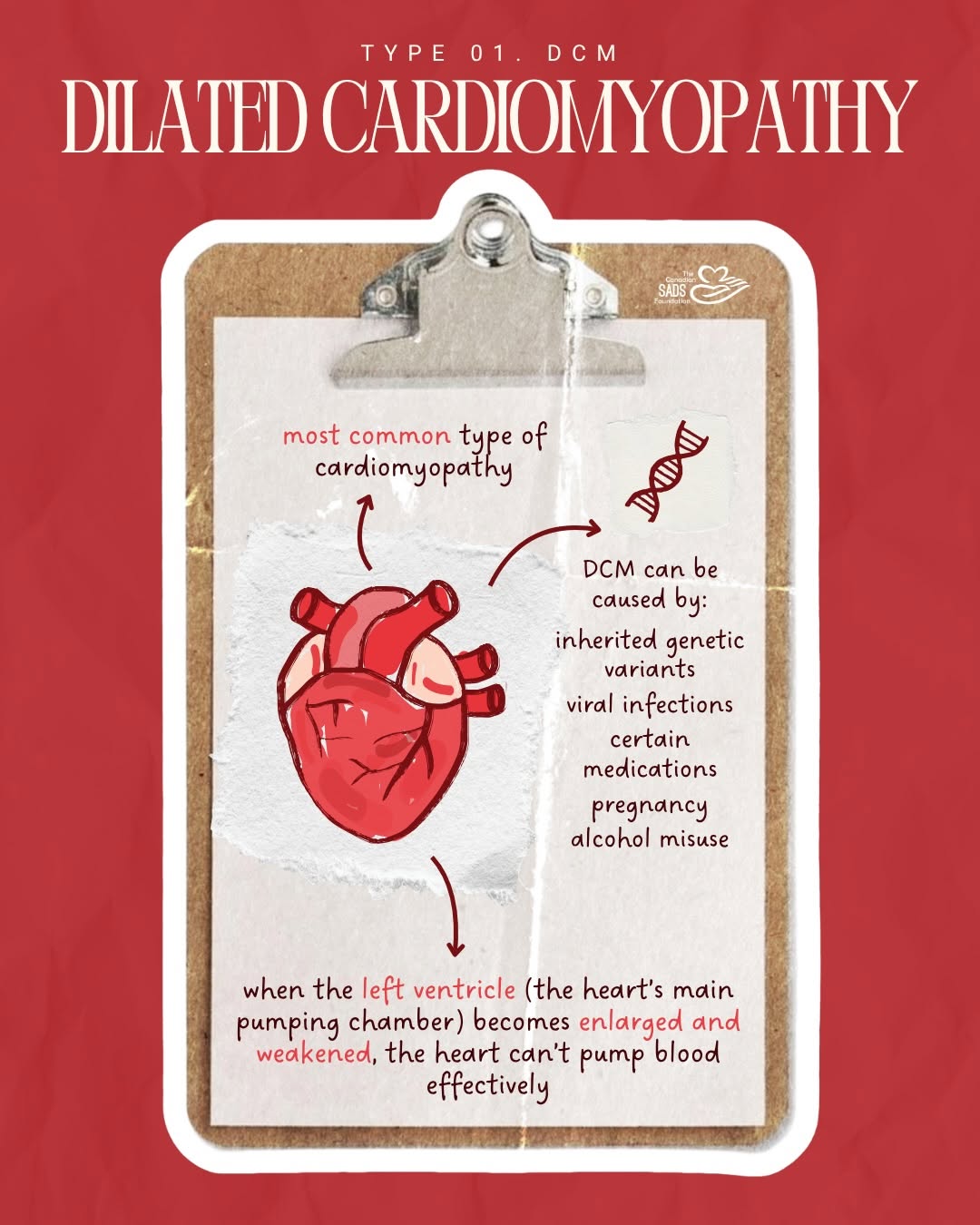
Dilated cardiomyopathy (DCM) is a condition that causes the heart muscle to become stretched, enlarged, and weaker. It most often affects the left ventricle, the heart's main pumping chamber.
As the heart enlarges, it becomes less able to pump blood efficiently to the rest of the body. Over time, this can lead to heart failure, abnormal heart rhythms (arrhythmias), or other complications.
How Common is DCM?
DCM is estimated to affect approximately 36 people per 100,000 in the general population. Based on Canada's population, this means that an estimated 15,000 Canadians are living with DCM. Because some people have few or no symptoms, the true number may be higher than current estimates.
DCM can affect people of all ages but occurs most frequently in men and individuals younger than 50.
Signs and Symptoms
Symptoms often develop gradually and may become more noticeable over time. Common symptoms include:
- Shortness of breath, especially during physical activity or when lying flat
- Fatigue or reduced ability to exercise
- Swelling in the feet, ankles, legs, abdomen, or neck veins
- Heart palpitations (feeling like your heart is racing, fluttering, or skipping beats)
- Dizziness or lightheadedness
- Fainting (syncope)
- A persistent cough, especially when lying down
Some people have very few symptoms, while others develop signs of heart failure as the condition progresses.

What Causes DCM?
Some people inherit a genetic change that affects the heart muscle, while others develop DCM later in life because of another condition or exposure.
Possible causes include:
- Inherited genetic variants
- Coronary artery disease or previous heart attacks
- Viral infections affecting the heart muscle
- Inflammation of the heart (myocarditis)
- Long-standing high blood pressure
- Certain chemotherapy medications
- Heavy alcohol use or recreational drug use
- Pregnancy (in rare cases)
- Unknown causes (sometimes called idiopathic DCM)
Genetic DCM is typically inherited in an autosomal dominant pattern, meaning a child has a 50% chance of inheriting the variant from an affected parent. Understanding the cause of DCM can help guide treatment and determine whether other family members should be evaluated. More than 70 genes are associated with the condition. Key genes include:
TTN (Titin): The most common genetic cause, accounting for 15–25% of cases.
LMNA (Lamin A/C): Accounts for 5–10% (or 4–8%); often presents heart rhythm problems and conduction disease before the heart weakens.
MYH7: Accounts for 4–8%; can also cause HCM.
TNNT2: Accounts for 3–6%; often associated with early-onset, severe disease.
RBM20: Accounts for 3–6%; linked to severe disease, particularly in men.
BAG3: Accounts for ~3%; associated with progressive heart failure.
Treatment and Management
Although DCM is a lifelong condition, many people live full and active lives with appropriate treatment and regular follow-up.
Treatment is based on the cause of the condition, the severity of symptoms, and how well the heart is pumping.
Treatment options may include:
Medications
An echocardiogram is an ultrasound of the heart and can see the enlarged left ventricle. It can also detect a lower than normal left ventricular ejection fraction. There are some other medical conditions or exposures that can also lead to dilated cardiomyopathy. Your doctor will likely want to order several different heart and blood tests.
People with dilated cardiomyopathy take medications to help improve the heart function and prevent complications. In some cases, cardiac devices are recommended.
Implantable Devices
An echocardiogram is an ultrasound of the heart and can see the enlarged left ventricle. It can also detect a lower than normal left ventricular ejection fraction. There are some other medical conditions or exposures that can also lead to dilated cardiomyopathy. Your doctor will likely want to order several different heart and blood tests.
People with dilated cardiomyopathy take medications to help improve the heart function and prevent complications. In some cases, cardiac devices are recommended.
Advanced Therapies
An echocardiogram is an ultrasound of the heart and can see the enlarged left ventricle. It can also detect a lower than normal left ventricular ejection fraction. There are some other medical conditions or exposures that can also lead to dilated cardiomyopathy. Your doctor will likely want to order several different heart and blood tests.
People with dilated cardiomyopathy take medications to help improve the heart function and prevent complications. In some cases, cardiac devices are recommended.
Living With DCM
Many people with DCM continue to work, exercise, travel, and enjoy daily life with appropriate treatment and ongoing care.
Your healthcare team may recommend:
- Taking medications exactly as prescribed
- Staying physically active with an exercise plan that is appropriate for you
- Eating a heart-healthy diet
- Limiting or avoiding alcohol
- Avoiding smoking and recreational drugs
- Managing other conditions such as high blood pressure or diabetes
- Attending regular follow-up appointments with your cardiologist
Because every person's DCM is different, your treatment plan should always be tailored to your individual needs. Regular monitoring can help detect changes early and reduce the risk of complications.
Additional Resources
Please note: The Canadian SADS Foundation provides links to external websites for informational purposes only. While we regard these as reputable sources of information, please be aware that The Canadian SADS Foundation is not responsible for the accuracy, legality, or content of the external site or for that of subsequent links.