
Hypertrophic Cardiomyopathy (HCM)
What is Hypertrophic Cardiomyopathy?
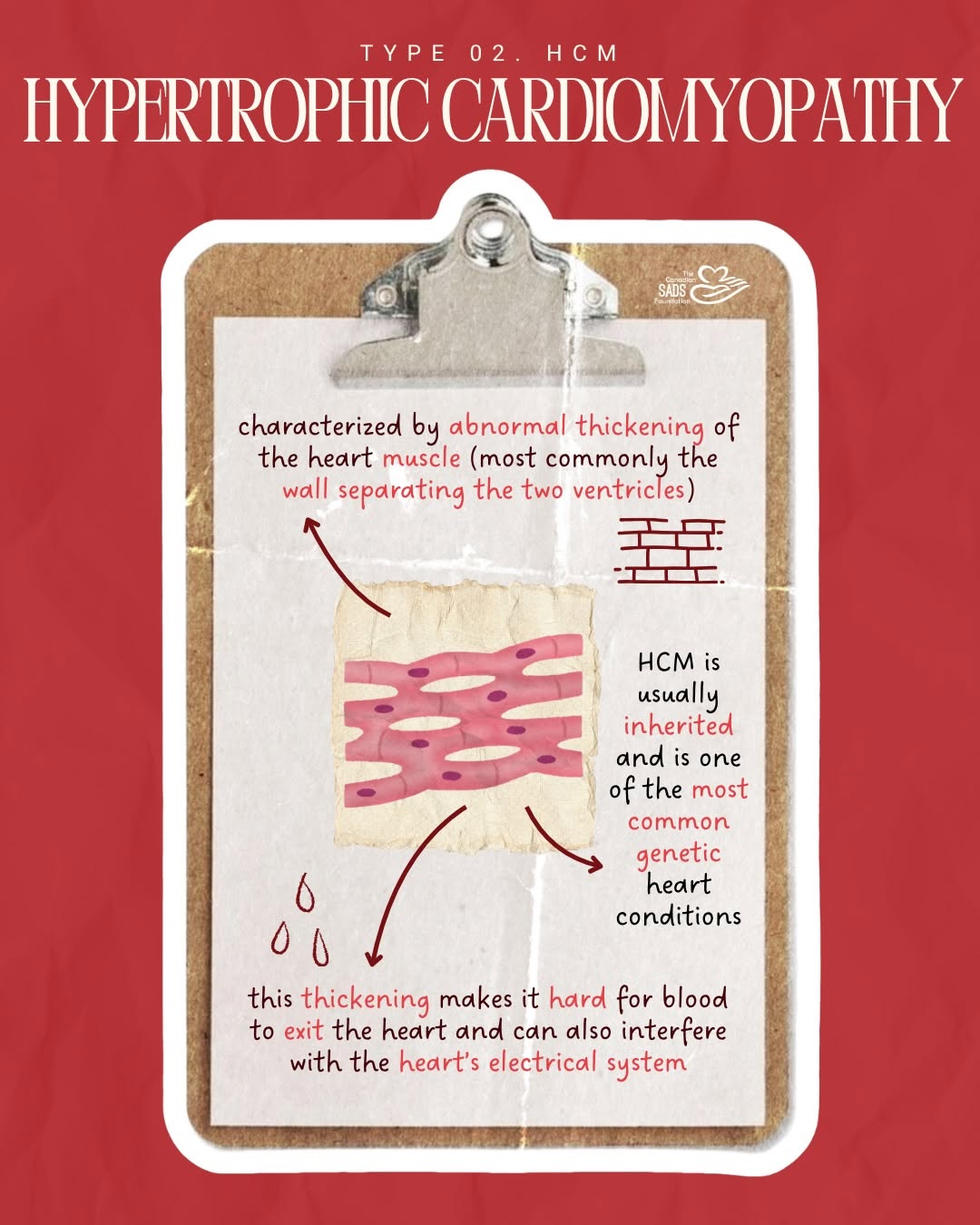
Hypertrophic cardiomyopathy (HCM) is the most common inherited heart muscle condition. It occurs when the heart muscle becomes abnormally thick (hypertrophied), most often in the wall of the left ventricle, the heart's main pumping chamber.
As the heart muscle thickens, it can become stiffer and less able to relax between beats. In some people, the thickened muscle also blocks blood from leaving the heart, making it harder for the heart to pump blood to the rest of the body.
How Common is HCM?
HCM affects approximately 1 in 500 people, making it one of the most common inherited heart conditions.
It is estimated that more than 76,000 Canadians are living with HCM. However, many people remain undiagnosed.
Signs and Symptoms
Many people with HCM feel completely well and only learn they have the condition through family screening or routine testing.
When symptoms do occur, they may include:
- Shortness of breath: This typically happens during exercise or physical exertion, and sometimes after eating a large meal.
- Chest pain: This is often described as a discomfort or tightness in the chest, particularly during activity or after a large meal.
- Fainting (syncope) or near-fainting (presyncope): These episodes, which include dizziness and lightheadedness, often occur during or just after exercise or other physical activity.
- Palpitations: These are sensations of abnormally fast, fluttering, pounding, or skipped heartbeats.
Because these symptoms are common to many conditions, HCM is sometimes mistaken for asthma, anxiety, or other heart conditions.

What Causes HCM?
HCM is most often caused by a genetic change (variant) that affects the proteins responsible for helping the heart muscle contract. HCM is typically inherited in an autosomal dominant pattern, meaning each child of an affected parent has a 50% chance of inheriting the genetic variant.
Over 1,500 genetic variants are associated with HCM:
- Most Common Genes: MYBPC3 (accounts for ~40–50% of cases) and MYH7 (accounts for ~35–40%).
- Other Noted Genes: TNNT2 (~5%, associated with higher arrhythmia risk), TNNI3 (~5%), TPM1, MYL2/3, and ACTC1 (all <5%).
- Unknown Causes: In approximately 40% of clinical cases, current genetic testing panels may not identify a causative variant.
Because HCM can run in families, healthcare providers often recommend genetic counselling, genetic testing, and heart screening for close relatives, even if they have no symptoms.
Early diagnosis can help prevent complications and ensure appropriate monitoring and treatment.
How is HCM Diagnosed?
HCM may be diagnosed after someone develops symptoms, during an investigation for a heart murmur, or through screening because of a family history of HCM or sudden cardiac arrest.
Your healthcare provider may recommend one or more of the following tests:
Echocardiogram (Echo): An ultrasound that shows the size, thickness, and pumping function of the heart.
Electrocardiogram (ECG): Records the heart's electrical activity and can identify abnormal rhythms or changes suggestive of HCM.
Cardiac MRI: Provides detailed images of the heart muscle and can identify areas of scarring.
Exercise stress test: Evaluates how the heart responds during physical activity and can detect changes that are not present at rest.
Holter or event monitor: A wearable monitor that records the heart rhythm over several hours or days to detect intermittent arrhythmias.
Genetic testing: May help confirm an inherited diagnosis and identify family members who could also be at risk.
Treatment and Management
There is currently no cure for HCM, but many people manage the condition successfully with regular follow-up and personalized treatment.
Treatment depends on your symptoms, whether blood flow is blocked, and your individual risk of abnormal heart rhythms.Your healthcare team will discuss which treatment options are most appropriate for your individual situation.
Treatment options may include:
Medications
Medications can help reduce symptoms and improve heart function. These may include:
- Beta-blockers
- Calcium channel blockers
- Mavacamten (Camzyos®) for some people with obstructive HCM
- Other medications recommended by your cardiologist
Implantable Devices
Some people at higher risk of sudden cardiac arrest may benefit from an implantable cardioverter-defibrillator (ICD), a small device that monitors the heart rhythm and can deliver a life-saving shock if needed.
A pacemaker may also be recommended in certain situations.
Advanced Therapies
If medications do not adequately relieve symptoms caused by blocked blood flow, procedures may be considered, including:
- Septal myectomy, a surgery to remove part of the thickened heart muscle
- Alcohol septal ablation, a minimally invasive procedure that reduces the thickness of the heart muscle
Living With HCM
Many people with HCM lead full and active lives.
Regular follow-up with a cardiologist is important to monitor the condition over time. Your healthcare team may also recommend:
- Staying physically active with an exercise plan that is appropriate for you
- Eating a heart-healthy diet
- Managing blood pressure and other medical conditions
- Avoiding smoking and recreational drugs
- Taking medications exactly as prescribed
- Learning which symptoms should prompt urgent medical attention
Because everyone's HCM is different, your treatment and activity recommendations should always be individualized in consultation with your healthcare team.
Additional Resources
Please note: The Canadian SADS Foundation provides links to external websites for informational purposes only. While we regard these as reputable sources of information, please be aware that The Canadian SADS Foundation is not responsible for the accuracy, legality, or content of the external site or for that of subsequent links.
Hear from families affected by HCM
Tim's Story
Read about Tim's journey with HCM.
Nadia's Story
Read about Nadia's family and their journey with HCM.