School Safety Toolkit
Welcome to The Canadian SADS Foundation’s School Toolkit – a vital resource for parents and educators dedicated to creating a safe and responsive educational environment for children with SADS conditions.
These resources are designed to facilitate collaboration between parents and school officials. The goal is to ensure the school understands the child’s condition and that a personal emergency response plan is in place. Please take the time to communicate with your healthcare team regarding an appropriate plan. Feel free to adapt these materials to make them more individualized for your child’s needs.
Personalized Student Safety Poster
As part of our toolkit, we are offering a customizable Student Safety Poster designed to aid teachers and school staff in recognizing and swiftly reacting to potential emergencies associated with your child’s SADS condition. By providing a clear visual reference, in the form of your own child’s picture, along with information about his/her specific SADS condition, this poster will serve as an immediate guide for an effective response during critical moments.
Personalized Student Safety Poster
Click the button below to learn more about how we can assist you to create a personalized Student Safety Poster for your child.
SADS Awareness Colouring Pages
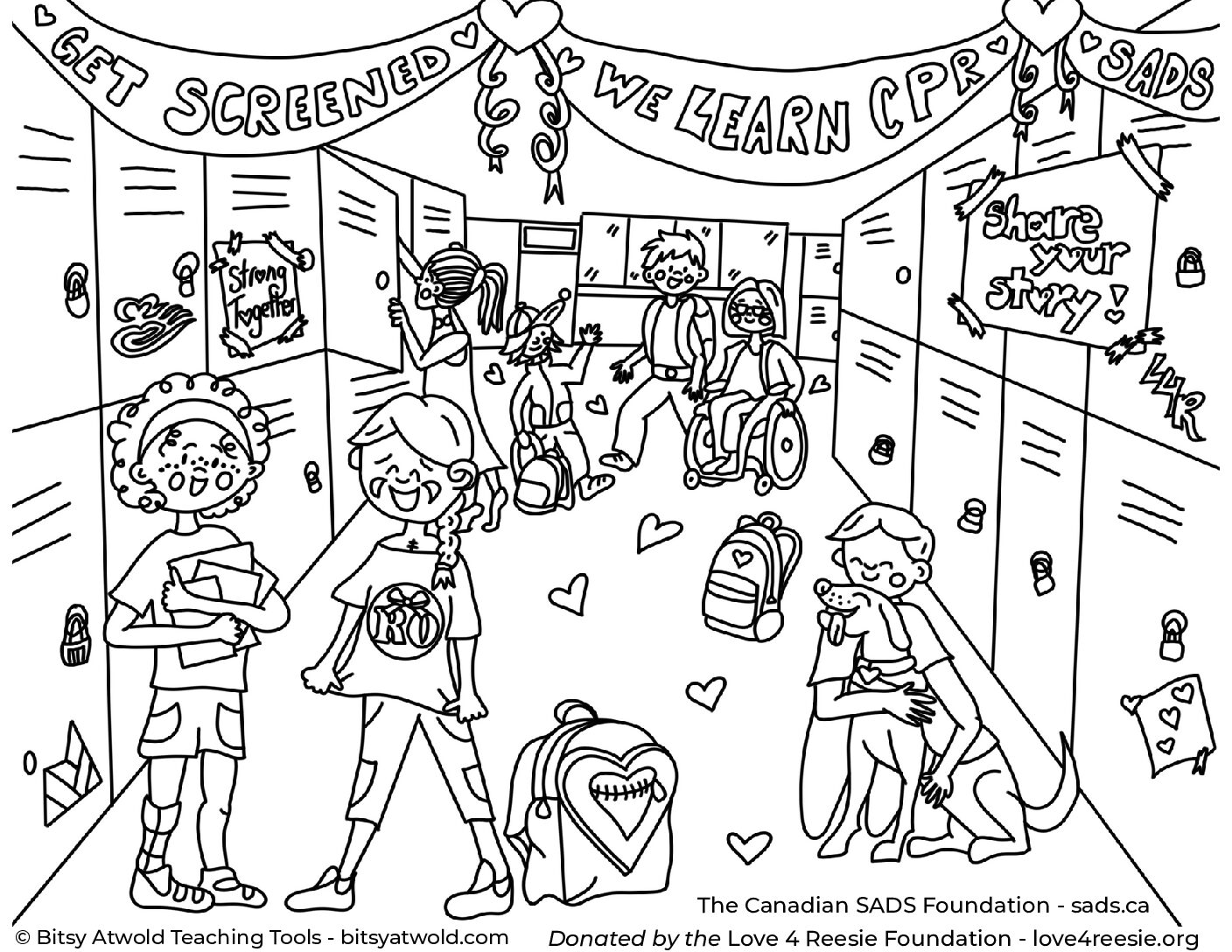
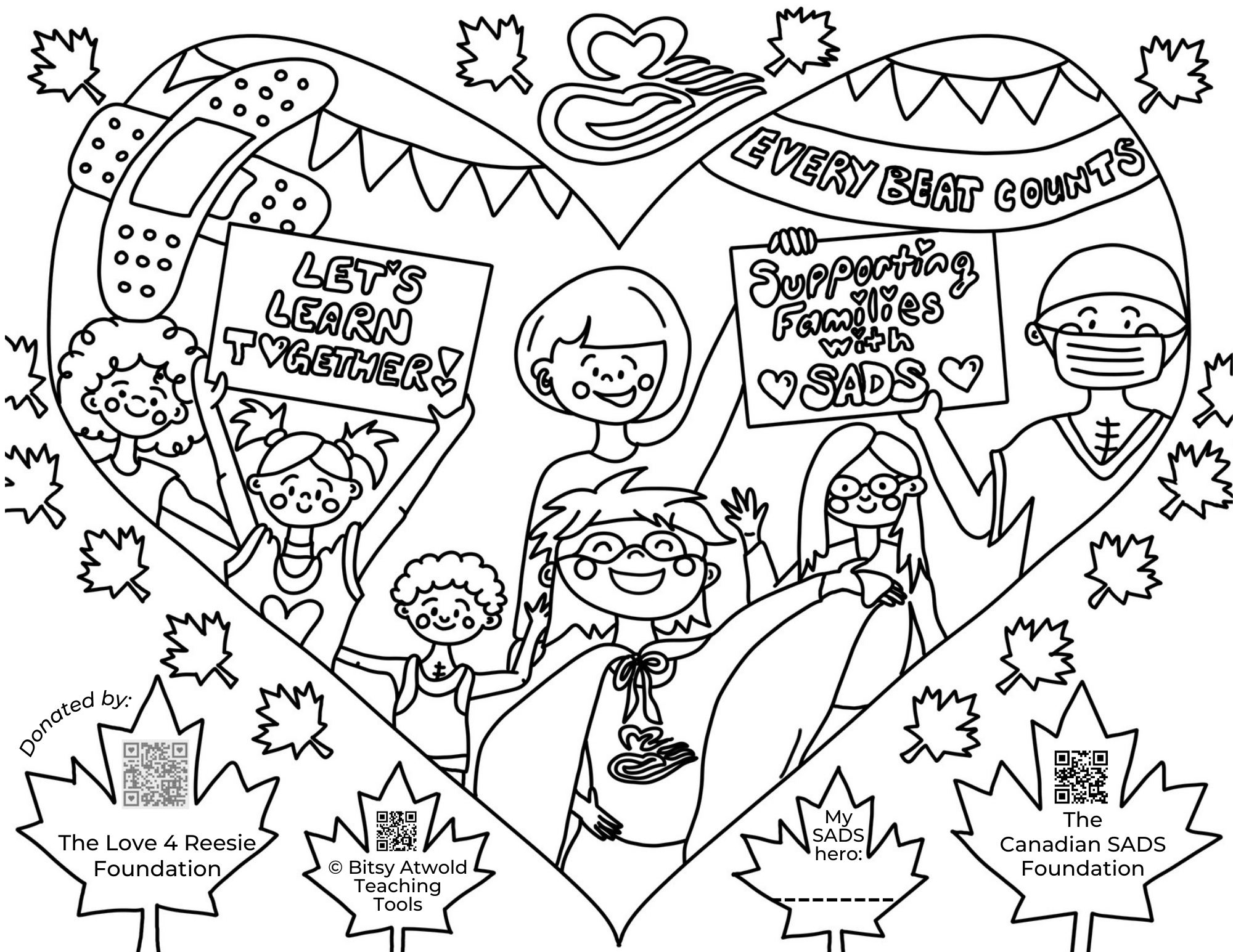
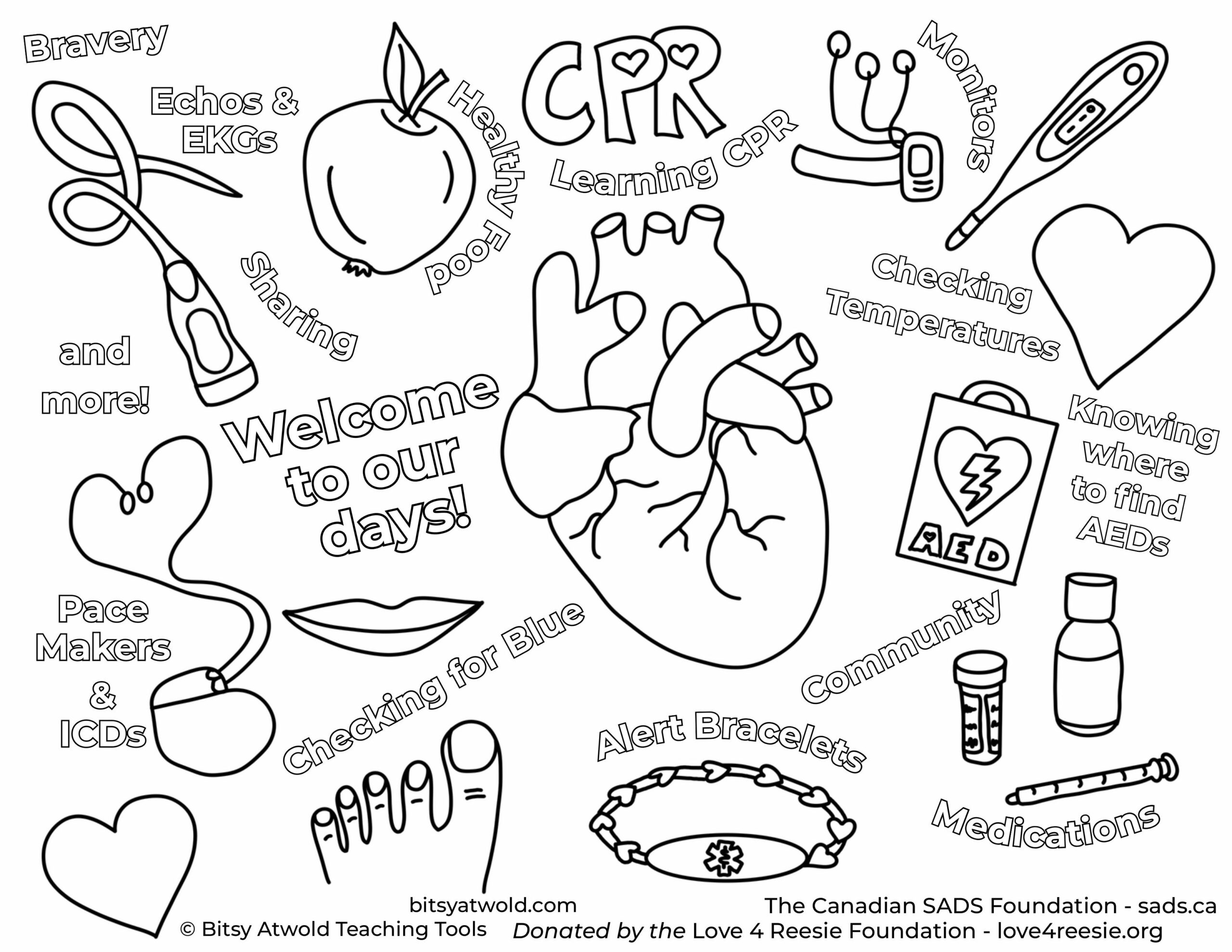
These downloadable colouring pages were created to help children with SADS conditions feel seen, understood, and supported in the classroom. It can be used as a gentle way to introduce your child’s care needs to classmates and help foster a more inclusive and compassionate school environment. Parents and educators are encouraged to print and share the page with the class. It’s a simple, age-appropriate tool that can help build awareness and empathy among peers while supporting the overall message that every student belongs.
This resource was generously donated by the Love 4 Reesie Foundation to the Canadian SADS Foundation as part of our shared goal to promote understanding and safety for all children living with SADS conditions.
Download the colouring page below and help create a classroom where every child feels safe, included, and represented.

Additional Resources for School Staff
In partnership with SaveStation and Action First Aid, The Canadian SADS Foundation presents an array of resources tailored to equip school officials and pertinent individuals with knowledge on managing sudden cardiac arrest emergencies:
1. Recognition: Videos highlighting how to identify sudden cardiac arrest symptoms.
2. CPR & AED Training: Educational clips demonstrating appropriate CPR techniques and the use of AEDs.
While some students may have a heart device implanted in their upper body, it is imperative to understand that, in the event of an emergency, immediate CPR/AED intervention remains crucial. Interacting with implantable heart devices during CPR poses no risk to the responder.
In addition to the videos found below, we also highly recommend visiting the SaveStation Videos page for comprehensive AED Training refresher videos and more. Each AED model has its nuances, and it’s vital to be familiar with the one installed at your school. Annual CPR/AED training is vital to understanding how to operate the specific AED on your premises and to enhancing your readiness to act decisively during an emergency.
We urge parents to direct school officials to this resource section to bolster their preparedness. For ease of sharing, each video is available on YouTube—simply copy the URL to share directly.
English Videos
Vidéos en français
Our sincere thanks to SaveStation and Action First Aid for their support in creating this project.